
09 Oct 2026
How to Dilute Essential Oils Safely: Dilution Chart by Age and Use

Ever found an essential oil you love, grabbed a bottle of jojoba oil, and wondered how many drops to mix in? You are not alone.
Knowing how to dilute essential oils makes topical routines easier to plan and helps you avoid using more concentrated oil than necessary. At Cliganic, we believe in a simple, “less is more” approach. In this guide, we’ll walk through dilution percentages, a practical chart, carrier oils, and important safety considerations for different ages and applications.
Quick Answer: How Much Should You Dilute Essential Oils?
For general adult topical use, we recommend approximately 0.5–1% dilution for the face and 1–3% for the body. For every 10 mL of carrier oil, that is roughly 1–3 drops for facial blends and 3–9 drops for body blends.
These are starting guidelines, not guarantees of safety for every oil or person. Always check the individual oil’s restrictions, dilute before application, and patch test a new blend.

Essential Oil Dilution Chart
Use this chart as a quick reference before making a blend. Drop counts are approximate, so follow the specific product instructions and oil-specific safety guidance.
|
Age or Use |
Suggested Dilution |
Approximate Amount |
Important Note |
|
Adult face |
0.5–1% |
1–3 drops per 10 mL carrier |
Avoid the eye area |
|
Adult body |
1–3% |
3–9 drops per 10 mL carrier |
Adjust for the specific oil |
|
Sensitive areas |
Start conservatively |
Follow oil-specific guidance |
Patch test first |
However, these percentages do not make every essential oil suitable for every age or application. Some oils have stricter limits. Always seek qualified advice before using essential oils on babies or young children.
What Does an Essential Oil Dilution Ratio Mean?
An essential oil dilution ratio describes how much essential oil is present in the finished blend. A 1% dilution means the essential oil makes up approximately 1% of the total mixture. Lower percentages mean less essential oil relative to the carrier.
You might wonder why you can't simply count the drops. It's important to understand that droppers vary, and essential oils and carrier oils differ in viscosity and other physical properties. That makes drop counts estimates, not exact measurements. For a consistent routine, use the same clean measuring tools and carrier volume each time.
Understanding the percentage helps you follow a recipe thoughtfully instead of adding drops until a blend smells strong enough.
Why Carrier Oils Make Dilution Simple
Carrier oils provide the base that helps disperse essential oils for topical application. They also improve glide, making a blend easier to spread over the skin.
We recommend choosing a carrier based on your routine:
-
Jojoba Oil: A versatile option for facial and body-care blends.
-
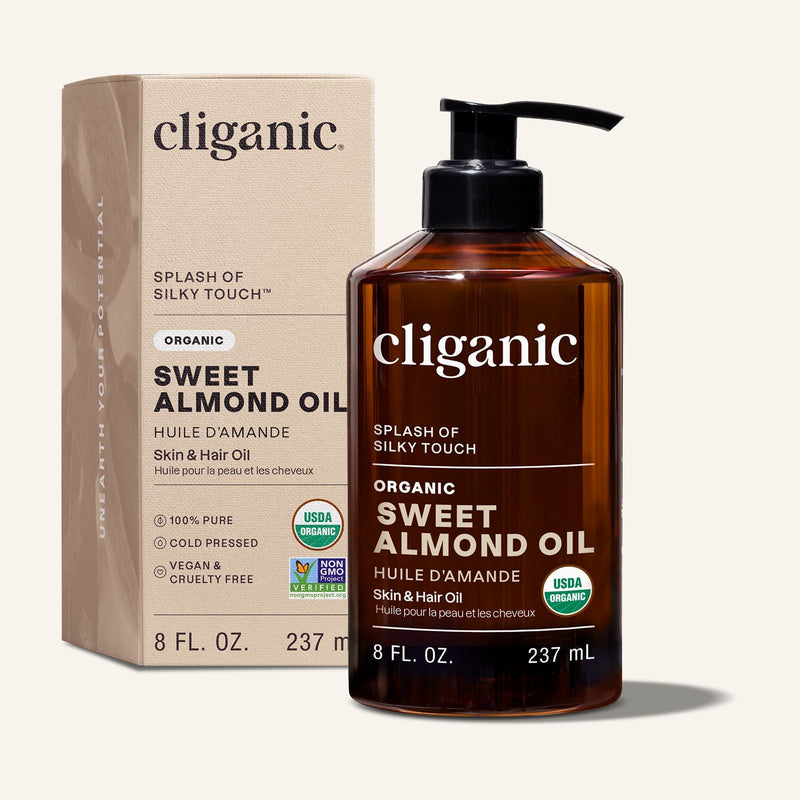
Sweet Almond Oil: A practical choice for body-care routines; avoid it if you have a relevant nut allergy or sensitivity.
-
Sunflower Oil: A plant-based option for a simple, lightweight-feeling blend.
Explore Cliganic Organic Jojoba Oil to find a carrier for your routine. You can also read our guide to diluting essential oils for additional examples and practical guidance.
How to Dilute Essential Oils Step by Step
Learning to dilute essential oils starts with a clear plan, not guesswork.
-
Choose the Use Case: Decide whether the blend is intended for your face, body, hair, or scalp.
-
Select a Carrier: Choose a suitable plant oil or compatible, unscented base.
-
Start Conservatively: Follow the appropriate dilution guidance and the individual oil’s restrictions.
-
Measure Carefully: Use the chart as a starting point, not a reason to exceed the recommended amount.
-
Mix Thoroughly: Combine the essential oil with the carrier before applying.
-
Patch Test: Apply a small amount to an inconspicuous area and monitor for a reaction before regular use.
Avoid applying concentrated essential oils directly to the skin. Stop using a blend if irritation develops.
Choosing the Right Dilution for Face, Body, Hair, and Scalp

For facial applications, stay within the lower range and choose oils specifically suitable for the face. For the body, we generally recommend 1–3%, but some oils may require less.
For hair and scalp routines, dilute essential oils in a suitable carrier or hair-care base. Do not apply them neat to the scalp, and keep blends away from the eyes and broken skin. If your skin is sensitive, begin conservatively and patch test before use.
The goal is a blend that fits your routine without unnecessary concentration. Always follow the specific product instructions.
Common Dilution Issues to Keep in Mind
A few simple habits can help keep your routine more thoughtful:
-
Applying essential oils undiluted to the skin.
-
Assuming more drops mean better results.
-
Using an adult recipe for a child.
-
Using the same concentration on your face and body.
-
Ignoring oil-specific restrictions or skipping a patch test.
-
Mixing essential oils into plain water for topical use. Essential oils don't dissolve evenly in water, so water alone isn't a suitable carrier for a skin blend.
For added safety, use a clean, suitable container and label it with the oils and dilution used. Keep the bottle tightly closed in a cool, dark place, away from heat and direct sunlight. Store all oils securely out of reach of children and pets. Making smaller batches can also help you keep track of ingredients and freshness.



FAQs
Can I apply essential oils directly to my skin?
We recommend diluting essential oils in a suitable carrier before applying them to the skin. Concentrated oils can irritate skin.
Is a 1% dilution enough?
It may be an appropriate starting point for some adult facial applications, but suitability depends on the individual oil and the person using it.
Can I use the same dilution for my face and body?
Not necessarily. Facial applications generally call for lower concentrations than general body use.
Less Is More When You Blend

Once you understand how to dilute essential oils, building a simple routine becomes easier. Choose the right carrier, follow conservative guidance, and check the specific oil before every new blend.
At Cliganic, we also conduct GC/MS testing on essential oil lots and provide lot-specific Certificates of Analysis to support transparency around purity and consistency. Thoughtful measuring, patch testing, and careful storage are practical habits worth keeping.


